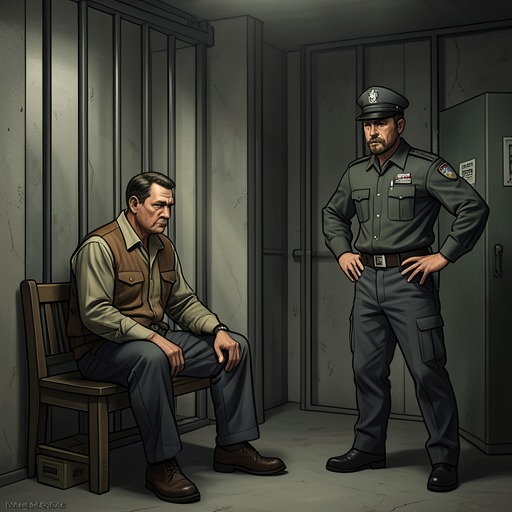
Molina Cares for Gravely Ill Valentin
Kiss of the Spider WomanMolina Cares for Gravely Ill Valentin describes how Molina responds to Valentin’s worsening illness with practical help and sustained attention. Their care takes place under the pressures of political imprisonment: Valentin fears that treatment in the infirmary could compromise a prisoner’s resistance, while his increasing weakness makes ordinary bodily needs difficult to manage alone. Molina’s assistance turns their shared cell from a setting of guarded conversation into one of exposure, trust, and reciprocal vulnerability.
Political Stakes and the Onset of Care
Valentin explains why a political prisoner cannot safely regard the infirmary as a neutral refuge. A comrade, he says, was given an addictive substance that weakened his will; Valentin fears that a prisoner’s resistance might similarly be worn down until interrogation could extract anything. He distinguishes his own position from Molina’s, suggesting that medical intervention would not carry the same consequences for him. The distinction makes his refusal of institutional care political as well as personal: preserving bodily control is connected to preserving the ability to resist.
That principle is tested by Valentin’s severe abdominal pain. He describes its increasing intensity and compares it to being struck from within. Molina promises to keep Valentin’s account secret, and, as the pain continues, offers to tell him a film story to distract him. The gesture does not resolve the illness, but it gives Molina a way to remain present without treating Valentin only as a patient. Storytelling becomes an immediate form of companionship alongside the practical care that follows.
From Urgent Need to Practical Assistance
The illness soon makes Valentin’s dependence unmistakable. During an episode of acute distress, he first asks Molina to call the guard, then tells him not to. Molina stays with him and helps manage the aftermath discreetly. At Valentin’s request, he gathers the sheet beneath him; when Valentin says he is cold, Molina offers his own blanket. The sequence moves from pain and loss of control to warmth and reassurance, with Molina attending to what Valentin needs rather than making his dependence an occasion for shame.
Valentin remains too weak to clean himself. Molina tells him to relax and carefully helps him wash, using a clean part of the sheet dampened with water. He checks that the mattress has not been soiled and guides Valentin through turning slowly. Valentin struggles to find words for his gratitude, but Molina treats the work as ordinary care, encouraging him to take his time. The scene’s practical details matter: a blanket, available water, and a clean piece of cloth become the means by which dignity is maintained in a cell that offers little privacy.
The prospect of a cold shower presents another risk. Molina warns that washing in freezing water could worsen Valentin’s condition. Instead, he proposes heating water in a pot and using towels so they can wash Valentin without exposing him to the cold: Valentin can wash his front while Molina helps with his back, and a second, damp towel can remove the soap. The offer is modest and specific, shaped by the resources available in the cell. Care here is neither an abstract declaration nor a cure; it is an improvised response to the conditions that make ordinary washing unsafe.
Sustained Attention and Emotional Disclosure
Molina’s attentiveness continues beyond the most immediate tasks. When Valentin feels dizzy and cannot rest, Molina remembers that they have chamomile tea, found beneath his magazines after they had lost track of it, and offers to heat some. The forgotten supply contrasts with the care Molina gives it: he notices a small available comfort and makes it useful at a moment when Valentin feels unwell and confused.
In another conversation during the illness, Valentin struggles to articulate whom he longs to see. He is afraid for a woman who is in danger, but recognizes that the person he longs to hear from and hold is Marta. He says that his longing for her is bodily and consuming, and that he feels as if he is dead, as though only she could revive him. This disclosure gives emotional shape to a vulnerability already made physical by his illness. Molina listens rather than turning Valentin’s admission into a joke or an argument. The distinction Valentin makes between concern for the endangered woman and his longing for Marta also shows how sickness and isolation bring separate fears and desires into sharper view.
Significance of Molina’s Care
The care is reciprocal in a way the circumstances initially obscure. Valentin has warned Molina about the danger that medical treatment could pose to political resistance, while Molina, despite not sharing that particular risk, takes responsibility for easing Valentin’s distress. He offers a story when pain becomes difficult to bear, lends warmth when Valentin is cold, helps him clean himself when weakness makes it impossible, and adapts washing to avoid the freezing shower. Each act answers a concrete need, and together they establish a form of trust that neither political discussion nor storytelling alone could produce.
The episode does not present Molina’s assistance as a medical solution or imply that Valentin’s condition has passed. Its significance lies instead in the altered terms of their companionship. Valentin’s body, normally subject to the discipline and scrutiny of imprisonment, becomes something Molina helps care for with patience and discretion. In receiving that help, Valentin allows a closeness that his concern for political self-command might otherwise resist. Care does not remove the prison’s constraints or the danger he associates with the infirmary; within those constraints, it makes vulnerability shareable.